Structural Damage and Failure Disputes
Fisher Scoggins Waters' knowledge of geotechnical and structural failure claims (defective design, defective construction or impact) means we are able to get to the heart of the problem swiftly and work towards resolving any dispute.
Causes can vary from concrete failure, metallurgical and welding failures, use of inappropriate materials, and construction/design failure.
Call Now Let Us Advise
Take the first step in resolving your structural damage and failutre claims. Please contact us by telephone on 0207 993 6960 or emailCharlotte Waters
Essentially a structural failure is loss or partial loss of the structure's load-carrying capacity initiated when the material (concrete, steelwork, masonry and timber) is stressed to its limit causing fracture or deformation.
Experience and current cases involving structural failures (complete losses, collapses and partial losses, excessive cracking/movement) include:
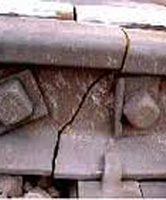
Some common defects include subsidence, heave, differential movement and drainage, cavity tie corrosion, contamination of concrete and metal fatigue.
Defective Design
We advise on claims against architects and structural engineers when it is said the service fell below that provided by a reasonably competent professional for example, by providing incorrect advice, inadequately prepared plans, inappropriate or inadequate supervision the project, failure to keep a project within the specified budget, and where inappropriate specification of materials was used.
Whether there is a cause of action or not will depend on a number of factors (1) being able to establish the professional who owes a duty; (2) that there was a failure to provide the services in a way which could reasonably be expected; (3) that as a result has been suffered financial loss has been suffered.
Construction Failures
Defects are one of the major causes of dispute in construction litigation. Dealing with construction failures requires a solid understanding of the law, construction terminology, technology and practice.
There is a big difference between a construction defect and a nuisance claim. Construction defects could range from complex foundation and frame issues, which threaten the structural integrity of the construction, to aesthetic issues such as improperly finished surfaces.
For a large number of construction projects project insurance will be in place which, under one policy, covers many of the interests of a number of project participants. Our team is able to provide specialist advice in respect of "loss of or damage to", and the various defective design, material and workmanship issues - the "DE clauses" and London Engineering Group "LEG" series, defects in design and defectively designed.
We defend claims in nuisance and under the Defective Premises Act 1972. We also advise on the Defective Premises Act (DPA) and, in particular, questions surrounding "Fit for Habitation".
For more information on the services Fisher Scoggins Waters offer, please contact us by telephone on 0207 993 6960 or email Charlotte Waters